
Dubai’s Millionaire Boom
Dubai’s millionaire boom accelerates as Gulf tensions drive rich to seek backup bases
Currency swings, oil volatility and a renewed focus on long-term wealth planning are changing how affluent families assess the Gulf’s major financial hubs
- Regional tensions strengthen Dubai’s position as a global wealth migration hub for affluent families seeking diversification.
- Dubai’s dirham peg to the dollar maintains its relative affordability compared to more expensive European wealth hubs.
- Wealthy families are increasingly relocating their entire financial architecture, beyond just property, to Dubai.
Regional tensions are strengthening Dubai’s position as a global wealth migration hub as affluent families increasingly seek multiple homes, banking centres and jurisdictions rather than relying on a single base.
What’s more, the current environment has reinforced the case for internationally mobile families to diversify where they live, invest and structure their wealth,
“Dubai has emerged as one of the premier hubs they choose as per “Specialists at Julius Baer, said.
The comments come as the Gulf faces renewed pressure from the latest US-Iran escalation, after attacks on vessels near the Strait of Hormuz were followed by US strikes on southern Iran and Iranian claims of retaliation against military sites in Bahrain and Kuwait.
The escalation has revived concerns over shipping, energy security and the durability of the ceasefire framework agreed last month. However, the renewed fighting should not “fundamentally alter the market outlook” despite keeping a geopolitical premium in oil prices,
“Neither side is seeking a full resumption of war so skirmishes are likely to ultimately settle down. “There is little reason to believe oil markets will purely be driven by supply/demand dynamics again, so geopolitical risk should keep a higher floor on oil prices for the coming months.”
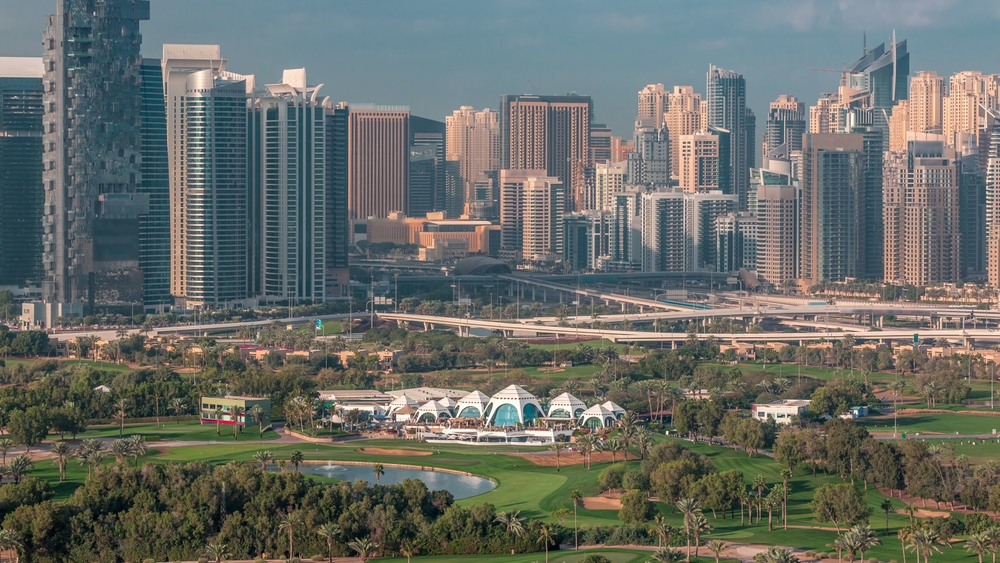
Source: Shutterstock
Dubai’s value gap widens
Julius Baer’s Global Wealth and Lifestyle Report 2026 found that the global cost of maintaining a premium lifestyle rose 10.2 percent in US dollar terms over the past year. The report said the increase was driven less by local inflation and more by currency fluctuations, with cities tied to the euro and Swiss franc becoming more expensive for internationally mobile families.
Dubai fell to 14th place in the report’s global lifestyle index, down from seventh last year the drop should not be read as a sign of weaker demand or declining appeal.
“As European currencies strengthened, traditional hubs became markedly more expensive, while the dirham’s peg to the dollar held Dubai’s pricing relatively stable,” he said.
“That is precisely why the emirate now sits 14th in the Global Wealth & Lifestyle 2026 index: rivals became far more expensive, Dubai did not.”
The UAE dirham’s peg to the dollar had moved “from a technical financial detail into a tangible pillar of Dubai’s lifestyle appeal,” offering value across premium cars, jewellery, business-class travel and prime real estate compared with major Asian and European hubs.
The report said Dubai’s relative affordability was not the result of falling local costs, but reflected rival wealth hubs becoming substantially more expensive. It also said the city’s prime real estate market continues to offer relative value compared with top-tier Asian and European hubs, helping attract wealth migration.
From homes to wealth structures
Property remains the most visible entry point for wealthy families moving to Dubai, but the bigger shift is happening after the initial purchase.
“Property remains the most visible entry point,” he said. “However, the more telling story is what happens after the initial purchase: families are increasingly bringing their entire wealth architecture with them, rather than just buying a home.”
That includes banking relationships, family offices, operating companies and succession structures, he said, turning relocation into a longer-term commitment.
“So, while property opens the door, it is the establishment of banking relationships, family offices, operating companies, and succession structures that transforms a physical move into a multigenerational commitment,” Saksena said.
He added that leading families now based in Dubai International Financial Centre oversee more than $1.2 trillion in combined assets.
The trend comes as the Middle East becomes more focused on formal wealth planning. Julius Baer said 98 percent of regional respondents belonged to larger family households, while six in ten had acted on succession planning over the past year. The region also leads globally in professionalised wealth management, with 65 percent using family offices and 73 percent adopting formal governance frameworks.
Still, Confidence among Middle Eastern high-net-worth individuals has moderated slightly since the survey was conducted, following the latest regional escalation. The survey had captured a strong period for the region’s wealthy, with a third of Middle Eastern HNWIs reporting major financial gains last year and 43 percent increasing both investment and lifestyle spending.
GCC GDP is now projected to contract by 0.2 percent in 2026 before rebounding 8.5 percent in 2027, according to forecasts cited by Julius Baer. Saksena said near-term pressure is concentrated in tourism, hospitality, real estate and aviation, and may run through the end of the year.
But he described the risk to Dubai’s wealth-hub momentum as “real but contained.”
“We therefore see this as a passing dip in demand and sentiment, not a structural challenge,” he said. “That is the mark of a hub whose foundations run far deeper than any single cycle.”
Source: Arabian Business